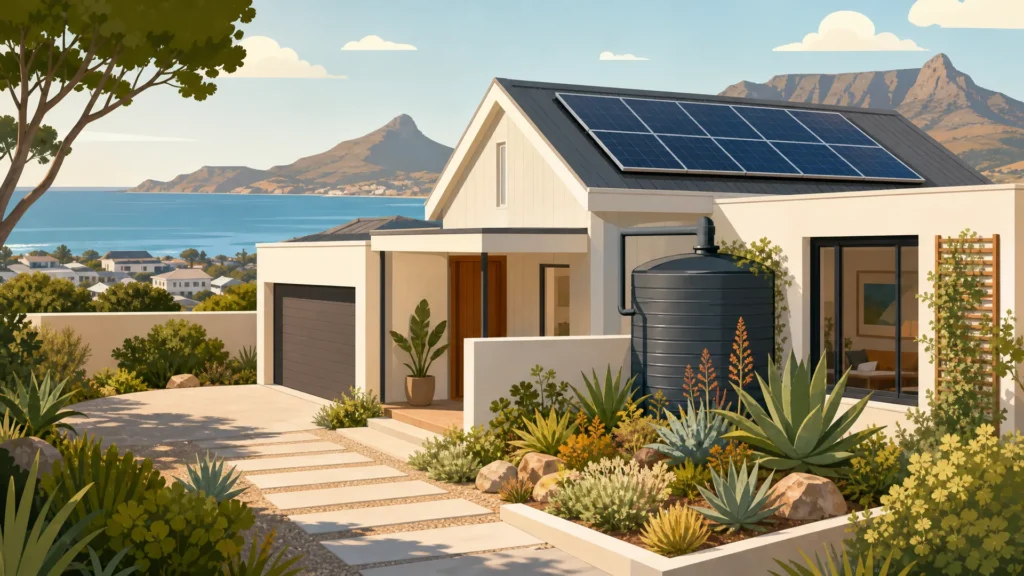
Green building renovation practices have moved well beyond niche status in Cape Town. For homeowners and commercial property owners dealing with water scarcity, near-daily load-shedding, and increasingly volatile coastal weather, an eco-conscious renovation is as much a practical decision as an environmental one. The right choices reduce long-term running costs, improve indoor comfort, and can meaningfully lift property value in a market where buyers are paying closer attention to energy and water performance.
Why Green Building Renovation Practices Matter in Cape Town
Cape Town’s climate creates pressures that make green renovation genuinely urgent in 2026. The Western Cape’s summer drought cycle, combined with municipal water restrictions that have tightened repeatedly over the past decade, puts a premium on water-efficient materials and rainwater-ready designs. Load-shedding, even at reduced frequency, drives demand for solar integration and passive energy strategies. Coastal humidity and salt-laden winds accelerate material degradation, so choosing durable, low-maintenance finishes is both a sustainability and cost-saving measure.
From a property value perspective, energy-efficient and exterior renovation transformations that boost property value consistently attract stronger buyer interest in the Cape Town market. Eco-friendly home updates reduce monthly utility costs, which makes a property more attractive on a total-cost-of-ownership basis, an argument that resonates with buyers and commercial tenants alike.
Sustainable Renovation Materials Worth Choosing
Choosing sustainable renovation materials is not about sacrifice. The best options available in 2026 match or outperform conventional materials in durability, while carrying a significantly lower environmental impact across their production and transport lifecycle.
Reclaimed and Locally Sourced Building Materials
Reclaimed timber is one of the most accessible eco-friendly materials for Cape Town renovations. Salvaged from demolished structures, it arrives kiln-dry and dimensionally stable, often denser and harder than new plantation timber. Local timber salvage yards operate across the Cape Peninsula, making sourcing straightforward.
Compressed stabilised earth blocks (CSEBs) are widely used in Western Cape self-build and eco-renovation projects. They offer strong thermal mass, absorbing heat during the day and releasing it slowly at night, and require significantly less embodied energy to produce than fired clay bricks. For homeowners building additions or feature walls, CSEBs are a compelling alternative.
Recycled aggregate concrete, made from crushed demolition rubble, reduces the demand for virgin quarried material and cuts transport emissions when sourced locally. For groundworks, pathways, and structural fill, it performs reliably.
Locally sourced materials consistently deliver a lower carbon footprint than imported alternatives because transport is one of the most significant contributors to a material’s lifecycle emissions. Specifying Cape Town or Western Cape suppliers wherever possible is a straightforward way to reduce the environmental impact of any renovation scope.
When humidity and damp management intersect with your material choices, particularly in wet rooms, bathroom renovation ideas suited to Cape Town’s climate can help you select finishes that resist moisture without relying on chemical-heavy treatments.
Low-VOC Paints and Eco-Friendly Surface Finishes
Conventional solvent-based paints off-gas volatile organic compounds (VOCs) for months after application, degrading indoor air quality and contributing to environmental pollution. Low-VOC and zero-VOC interior paints, now widely stocked by South African trade suppliers, dramatically reduce indoor air pollutants compared with traditional formulations, benefiting both occupant health and environmental impact.
For exterior surfaces, the choice of finish also affects thermal performance. Light-coloured, reflective coatings reduce solar heat gain through walls, lowering cooling loads. Wilcote’s painting teams specify products appropriate to Cape Town’s coastal UV exposure and salt air, ensuring longevity that avoids the waste and cost of premature repainting.
Good surface preparation is the foundation of any paint system’s durability. Surface preparation best practices before painting ensure that eco-friendly coatings adhere correctly and deliver their full service life, avoiding early failure and the rework it generates.
Energy Efficient Improvements That Cut Running Costs
Energy efficiency is where green building renovation practices deliver the most measurable financial return. The relationship between a well-specified building envelope and monthly electricity costs is direct and lasting.
Insulation, Glazing, and Passive Design Upgrades
Ceiling insulation is the single highest-impact upgrade for most Cape Town homes. Without it, summer heat penetrates directly into living spaces and winter warmth escapes overnight. Glass wool, rigid polyisocyanurate board, and cellulose insulation (made from recycled newsprint) are all available locally and perform well in the Western Cape climate.
Double-glazed windows reduce heat transfer through glazing by a meaningful margin compared to single panes. For older homes with original aluminium-framed windows, retrofit double-glazed units are increasingly cost-competitive. Combined with thermal curtains or external shading, improved glazing significantly reduces both heating and cooling demand.
Passive design choices cost little during a renovation but deliver energy savings across the lifetime of the building. Roof overhangs that shade summer sun but allow low winter sun, cross-ventilation layouts, and north-facing living spaces all contribute without adding complexity to the build.
South Africa’s SANS 10400-XA energy efficiency standard requires new builds and major renovations to meet minimum insulation and glazing performance levels. This benchmark increasingly shapes renovation scopes across Cape Town, and home extension builders who understand Cape Town’s building standards can help ensure compliance from the outset.
Solar-Ready Roofing and Waterproofing Choices
A roof prepared for solar panel installation, with correctly specified waterproofing, adequate load capacity, and conduit provisions for cabling, avoids costly rework when photovoltaic panels are added later. Getting this right during a roofing or waterproofing renovation is far more cost-effective than retrofitting later.
Reflective membrane systems and light-coloured roof coatings reduce the thermal load transferred into the building below. Wilcote Cape Town’s roofing and waterproofing teams routinely specify torch-on and reflective membrane systems that contribute to a building’s thermal performance, a direct overlap between quality workmanship and green building outcomes. Torch-on waterproofing compared to other methods explains the trade-offs clearly.
Damp penetration is a common trigger for green renovations. Addressing it properly with quality waterproofing protects the structure and prevents the mould growth and air quality issues that undermine a home’s liveability. For persistent wall moisture problems, rising and penetrating damp solutions for Cape Town walls outlines the remediation options suited to local building types.
Finding Green Suppliers and Contractors in Cape Town
The local contractor and supplier landscape for eco-friendly renovation has grown considerably in Cape Town. When evaluating a contractor or supplier, look for the following:
- Material transparency: Can they provide specifications, datasheets, or environmental product declarations for the materials they propose?
- Waste reduction practices: Do they separate construction waste on site and divert material from landfill through salvage or recycling?
- Familiarity with municipal regulations: Cape Town’s building control requirements and energy by-laws affect renovation scopes. A contractor unfamiliar with these creates compliance risk.
- Local sourcing preference: Contractors who actively source from Western Cape suppliers reduce transport emissions and support regional industry.
Online procurement platforms have made it easier to find eco-friendly products, but they cannot replace a contractor who physically knows the local material supply chain, understands Cape Town’s microclimate variations, from the cold South Easter-exposed Atlantic seaboard to the warmer, more humid False Bay side, and can manage quality on site.
Green Certifications and Environmental Standards to Know
Green certifications give homeowners and commercial property owners a consistent benchmark for measuring renovation performance. The three most relevant in South Africa are:
SANS 10400-XA is the South African National Standard for energy efficiency in buildings. It sets minimum requirements for insulation, glazing, and lighting in new builds and significant renovations. Compliance is increasingly required by Cape Town’s building department during plan approval.
Green Star SA, managed by the Green Building Council South Africa (GBCSA), is a comprehensive framework that rates buildings across energy, water, materials, indoor environment quality, and management categories. It applies to both commercial and residential projects, and a Green Star rating carries real weight with commercial tenants and buyers.
EDGE (Excellence in Design for Greater Efficiencies), promoted by the IFC (part of the World Bank Group), is one of the fastest-growing green building frameworks adopted by South African developers and is applicable to residential retrofit projects. EDGE certification requires a verified 20% reduction in energy use, water use, and embodied energy in materials relative to a baseline building, an achievable target for most medium-scale Cape Town renovations.
Understanding which certification applies to your project type early in the planning process shapes material, system, and contractor choices throughout. For commercial owners, certification can directly affect asset valuation and leasing terms.
Planning Your Green Renovation: Practical First Steps
A structured approach avoids the most common mistake in green renovations: making individual eco-friendly upgrades without a coherent strategy, and missing the interaction effects that deliver the biggest savings.
Step 1, Commission an energy audit. A professional audit identifies where your property loses energy and water, ranks interventions by cost-benefit ratio, and gives you a defensible baseline to measure improvement against.
Step 2, Build a material wishlist with your contractor. Before finalising a scope, list the sustainable renovation materials you want to prioritise, reclaimed timber, low-VOC paints, CSEB, recycled aggregate, and ask your contractor which local suppliers they work with.
Step 3, Brief your contractor on green expectations. Waste management on site, material sourcing provenance, and compliance targets (SANS 10400-XA as a minimum) should be written into the brief, not left to chance.
Step 4, Phase your budget realistically. Not every green upgrade needs to happen in one project. Prioritise the highest-impact items, insulation, roof waterproofing, and glazing, and plan subsequent phases for solar readiness, rainwater harvesting, and finishes.
When you are ready to move from planning to action, working with licensed home renovation contractors in Cape Town who combine technical knowledge with genuine familiarity with local suppliers and regulations is the most reliable path to a green renovation that delivers on its promises. Wilcote Cape Town works across roofing, waterproofing, painting, and full renovation scopes, and can advise on eco-friendly options at every stage of your project.