
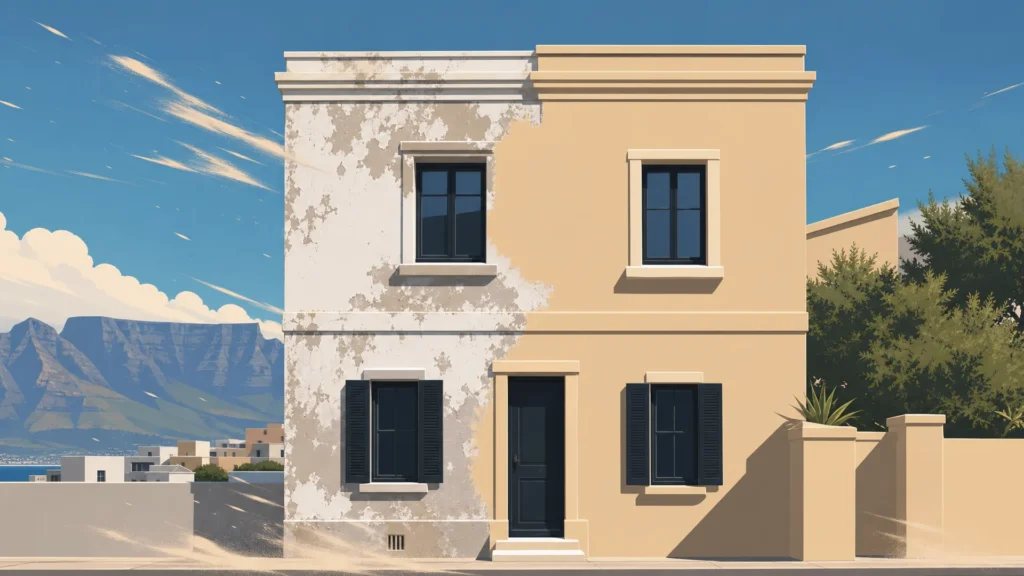
Cape Town is one of the most visually striking cities in the world, and the homes and commercial buildings here reflect that. But the same geography that makes the Peninsula beautiful also makes it genuinely hard on exterior surfaces. Choosing the right house painting services Cape Town specialists, ones who understand local climate, surface behaviour, and protective coating technology, is the difference between a finish that lasts a decade and one that starts peeling within two years.
Why Cape Town’s Climate Demands the Right Painting Service
No two cities are the same from a painter’s perspective. Cape Town’s combination of weather patterns creates a demanding environment that generic paint contractors, working without local knowledge, routinely underestimate.
The Impact of South-Easter Winds, UV Intensity, and Winter Rain on Paintwork
The Cape Doctor, the powerful south-easter that blows across the Peninsula each summer, carries fine particulate and salt-laden air far inland from the Atlantic Seaboard and False Bay. Coastal properties within a few kilometres of either coastline face accelerated paint degradation because salt deposits penetrate micro-cracks, accelerate chalking, and break down adhesion bonds. For these properties, elastomeric or alkali-resistant exterior coatings are a practical necessity, not an optional upgrade.
Summer UV intensity compounds the problem. Cape Town sits at roughly 34°S latitude, and summer solar radiation is intense enough to cause surface chalking and fading in standard acrylic finishes within a few seasons. Combined with the physical abrasion of high winds, exterior surfaces take a sustained beating from October through March.
Winter brings a different threat. The Western Cape winter (June–August) delivers sustained rainfall, parts of the Peninsula receive over 500 mm of rain per season. Moisture penetrating unpainted or poorly sealed cracks causes efflorescence, substrate crumbling, and adhesion failure in existing paint systems. This is why waterproofing your Cape Town property before the rainy season is often the sensible first step before any repainting work begins.
The upshot: generic residential painters working without climate-specific product knowledge and preparation protocols will consistently fall short in Cape Town’s environment. Specialist knowledge is a structural requirement.
Interior Painting Cape Town: Transforming Spaces with Lasting Colour
Interior environments are sheltered from UV and wind, but Cape Town’s humid winters create their own challenges indoors. Poor ventilation in older homes, many of which predate modern damp-proofing standards, allows moisture to migrate through walls, causing paint to blister, stain, or peel from the inside out. Professional interior painting Cape Town services address this at the prep stage, not as an afterthought.
Surface Preparation: The Foundation of a Flawless Interior Finish
No topcoat performs better than the surface beneath it. Before any paint is applied, a properly scoped interior job involves filling hairline cracks and holes with the correct filler compound, sanding surfaces smooth, cleaning walls to remove grease and dust, and applying an appropriate primer, particularly on new plaster, repaired areas, or surfaces with previous water damage.
This prep work is where most DIY attempts and budget contractors cut corners. Skipping primer on bare or patched plaster allows the topcoat to absorb unevenly, producing a patchy finish that looks poor within weeks. Proper preparation extends interior paint life significantly and prevents moisture bleed-through in Cape Town’s wet winter months.
Choosing the Right Finish for Each Room
Different rooms demand different finishes, and a paint color consultation helps homeowners navigate these choices before committing to full application.
- Matte / flat finishes suit low-traffic areas like bedrooms and formal lounges. They hide surface imperfections well but are harder to wipe clean.
- Eggshell and satin finishes offer a slight sheen and are more washable, ideal for living areas, hallways, and children’s rooms.
- Semi-gloss is the standard for kitchens, bathrooms, and skirting boards, where moisture resistance and cleanability matter most.
A colour consultation goes beyond choosing a shade from a fan deck. It accounts for a room’s natural light direction, ceiling height, the undertones already present in flooring and furnishings, and how a colour reads in Cape Town’s distinctive coastal light, which differs noticeably from the cooler, grey-filtered light common in northern climates.
Exterior Painting Specialists: Protection That Goes Beyond Aesthetics
Exterior painting is a fundamentally different discipline from interior work. The primary objective outdoors is not just appearance, it is protecting the building fabric from physical degradation. This is why exterior painting specialists use different product categories, application methods, and preparation protocols.
Weather-Resistant Coatings and Why They Matter on the Cape Peninsula
Elastomeric coatings are among the most effective exterior solutions for Cape Town properties. These flexible acrylic coatings bridge hairline cracks as the substrate expands and contracts with temperature change, preventing water ingress at points that rigid paint films would crack open. For older Cape Dutch and Victorian homes, which commonly have lime-plaster substrates that move seasonally, elastomeric finishes deliver measurably longer service life.
For properties directly exposed to ocean air, alkali-resistant primers and high-build exterior acrylics formulated for marine environments are the correct specification. Established South African paint manufacturers consistently recommend these systems for coastal exposure zones, and experienced exterior painting specialists in Cape Town stock and apply them as standard.
Seasonal Prep Advice: When to Paint and When to Wait
Timing an exterior repaint correctly is as important as product selection. Cape Town’s summer window, October through March, is the optimal period for exterior work. Temperatures are stable, humidity is low, and drying times are predictable. This allows multiple coats to cure fully between applications, which is critical for achieving the full protective performance of the paint system.
Scheduling exterior painting during the June–August winter period creates serious risks. Rain landing on freshly applied paint causes immediate adhesion failure. Even between rain events, residual surface moisture slows drying and creates conditions for mould growth beneath the paint film. If exterior work must proceed in winter, for example, on a sheltered elevation or under scaffold covers, a professional contractor will assess moisture readings before each coat and adjust the schedule accordingly.
Before any topcoat goes on, exterior surfaces require pressure washing to remove dirt, algae, and chalked paint; crack sealing with flexible exterior filler; spot priming; and full primer application where bare substrate is exposed. A well-prepared exterior surface can extend the effective life of a paint system from roughly three years to seven or more, a meaningful reduction in long-term maintenance spend for homeowners and commercial property managers.
Residential and Commercial Painting: Scoping Your Project
The practical requirements of residential and commercial painting projects differ significantly, and a contractor with genuine experience across both sectors will scope each project accordingly.
For residential painters working on a standard single-storey home repaint, a typical exterior project runs three to five working days, covering preparation, priming, and two finish coats. Multi-storey homes, textured surfaces, and heritage properties with intricate joinery naturally extend this timeline. Interior repaints are scoped room by room and can often be phased to keep the home liveable throughout the work.
Commercial painting, offices, retail shopfronts, restaurant fitouts, warehousing, or body corporate common areas, requires a different approach to planning. Commercial projects are typically phased and scheduled outside peak operating hours to avoid disrupting staff, customers, or tenants. Experienced commercial painting contractors prepare a phased programme upfront, agree access windows with the client, and coordinate trades to minimise downtime. Larger commercial projects are scoped with a full written specification, including surface preparation standards, product data sheets, and inspection hold points.
Whether you are a homeowner planning a full exterior repaint, a property manager overseeing a sectional title complex, or a business owner refreshing a retail space, the process starts with an accurate site assessment.
What to Expect When You Hire Wilcote Cape Town
Wilcote Cape Town’s painting teams work across residential, commercial, and industrial projects throughout the greater Cape Town metro, applying weather-resistant finishes and coordinating prep, application, and snagging under a single project manager. Here is how the client journey typically unfolds.
Site inspection: A Wilcote project manager visits the property to assess the existing surface condition, identify any substrate defects, and understand the scope of work accurately. This visit is free and carries no obligation.
Written quote: You receive a detailed written quotation covering preparation work, primer specifications, topcoat products, number of coats, and timeline. There are no verbal estimates that shift later, the quote is the contract basis.
Colour consultation: Before work begins, the team walks through finish and colour options suited to your property, its orientation, and your preferences. This is particularly valuable for clients who want to update a colour scheme but are unsure how different tones will read on their specific facade or in their interior spaces.
Preparation and application: The on-site team follows the agreed specification, surface cleaning, crack filling, priming, and applying coats with the correct drying intervals between each. No stage is rushed to hit an arbitrary deadline.
Snagging and handover: At completion, the project manager conducts a walkthrough with the client to identify any touch-up points before sign-off. Work is not considered complete until the client is satisfied.
For clients planning broader property upgrades alongside a repaint, Wilcote also operates as full-service home renovation contractors in Cape Town, which means painting, waterproofing, and structural repair work can be coordinated under one team rather than juggled across multiple contractors.
If you are ready to protect and refresh your property with house painting services Cape Town property owners rely on, contact Wilcote Cape Town to arrange your free site inspection and written quote.