
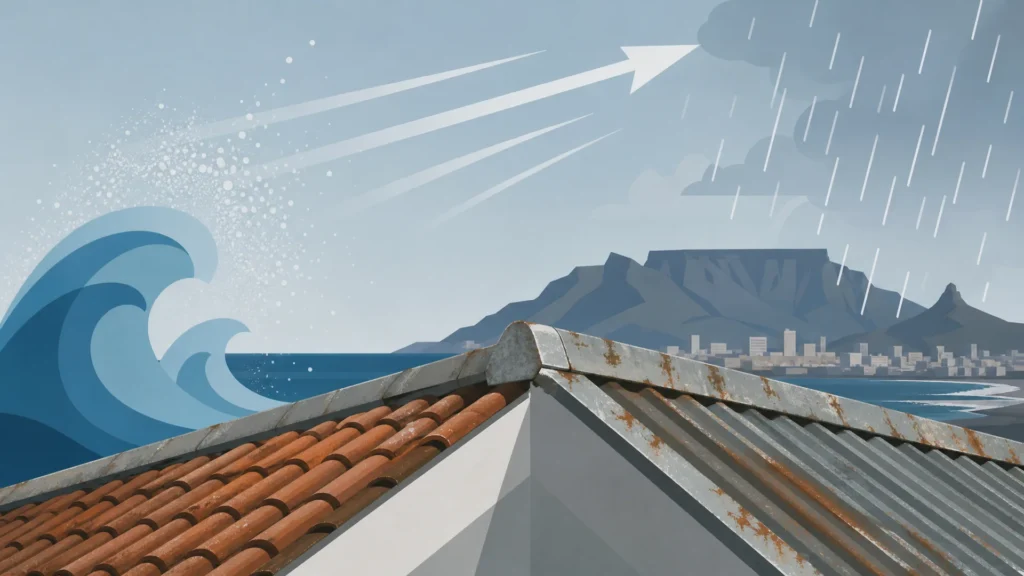
A roof that has never leaked can still be a few storms away from serious trouble. Most inspection checklists online are written for generic climates. They miss the details that matter most in Cape Town: salt-laden air, sharp seasonal wind shifts, and a rainy season that dumps most of the year’s water in just a few months. A proper roof inspection checklist for Cape Town needs to account for all three, not just the usual “check for loose tiles” advice.
This guide walks through what to check, how often to check it, and when a DIY look-over is enough versus when you need a professional on the roof.
Why a Cape Town Roof Inspection Checklist Needs a Local Angle
Cape Town’s weather doesn’t behave like most other regions. Homes here deal with salt spray drifting in off the Atlantic and False Bay, the region’s famous south-easterly winds, and a concentrated winter rainy season. Each of these stresses a roof differently. A checklist built for a dry inland climate, or even for Johannesburg’s summer thunderstorms, won’t flag the weak points that Cape Town homes develop.
Wilcote’s roofing crews work across Cape Town’s coastal suburbs and inland areas. The recommendations here reflect patterns seen on actual local roofs, not generic advice pulled from a general checklist.
How Salt Spray, Rain and Wind Differ From Other Regions
Salt spray corrodes metal fixings, flashing, and screws faster near the coast than almost anywhere else in South Africa. Add strong, sustained wind loading from the south-easter, and roof coverings take on stress that inland homes rarely experience.
Then there’s the rain. Cape Town’s rainy season concentrates most of the region’s annual rainfall into the winter months. Roofs left unchecked since the previous winter often only reveal their problems once the heavy rain returns. By the time water comes through the ceiling, the damage has usually been building for months.
DIY Roof Inspection Checklist: What to Look For
You don’t need to climb onto the roof to catch most early warning signs. A thorough ground-level and attic check will flag most issues before they become expensive repairs. This is the core of what to look for in a roof inspection, whether you’re checking your own home or a rental property.
Work through these areas systematically:
- Roof covering, look for cracked, slipped, or missing tiles; lifted or curling shingles; or rust spots on metal sheeting.
- Flashing and joints, check around chimneys, parapets, and vent pipes for gaps or lifted edges.
- Gutters and downpipes, clear debris, and look for sagging sections or visible rust.
- Fascias and barge boards, check for peeling paint, rot, or warping, especially on the windward side of the house.
- Ceilings inside the home, look for brown staining, bubbling paint, or damp patches, particularly after rain.
- Roof void or attic space, if accessible, check for daylight coming through gaps, damp timber, or signs of pest activity.
Signs Your Roof Needs Repair
A few warning signs deserve immediate attention rather than a “watch and wait” approach:
- Water stains on ceilings that appear or spread after rain
- Tiles or shingles found on the ground after windy weather
- Visible sagging in the roofline when viewed from the street
- Rust streaks running down walls below metal flashing or gutters
- A musty smell in roof spaces, which often points to trapped moisture
If you spot any of these, it’s worth reading up on deciding whether to repair or replace your roof before the damage spreads further.
How to Inspect Your Roof for Damage Safely
You can learn how to inspect a roof for damage without ever setting foot on it. Use binoculars from the ground to scan for lifted tiles or damaged flashing. Walk the perimeter of the house after storms. Check for debris, dislodged tiles, or displaced gutter sections on the lawn.
Inside, check the ceiling in every room, not just the ones below the main roof slopes. Leaks often travel sideways along rafters before showing up somewhere you wouldn’t expect. If you have loft access, a torch and a slow walk-through, stepping only on joists, will reveal most of what a homeowner needs to know.
Climbing onto the roof itself isn’t necessary for a basic check. It also isn’t safe without the right equipment and experience.
Roof Damage From Cape Town Weather: What to Watch For
Roof damage from Cape Town weather tends to fall into two categories: slow, cumulative deterioration from salt exposure, and sudden damage from wind or hail events. Knowing which one you’re dealing with changes both the urgency and the fix.
Salt Corrosion on Coastal Homes
Homes within a few hundred metres of the sea age differently than homes further inland. A house in a suburb like Muizenberg or Camps Bay will show salt corrosion on metal fixings years before an equivalent home in Durbanville or Constantia does.
Look specifically for white or green corrosion residue on galvanised fittings, rust bleeding from screw heads, and pitting on metal roof sheets. Coastal homes benefit from more frequent checks of exposed metal. Corrosion often starts small and spreads quickly once it takes hold.
Wind and Hail Damage After Storms
The Cape south-easter and winter cold fronts each leave a distinct signature on a roof. After a strong south-easter or a cold front passes through, lifted or cracked tiles and dislodged flashing rank among the most common callouts roofers see in the following days.
After any significant storm, check for tiles that have shifted position even slightly. A partially lifted tile lets water in long before it falls off entirely. Also check gutters for dents or detachment, and look at any parapet walls for signs the flashing has pulled away at the joints. A roof that looks fine from the ground can still have a compromised membrane or lifted flashing at a parapet joint. That’s the kind of detail only a close, hands-on inspection catches.
Roof Inspection Frequency for Cape Town Homes
Roof inspection frequency in Cape Town should follow the seasons, not a fixed annual date. Two checks a year, timed around the rainy season, cover most of what a homeowner needs.
Do the first check in autumn, before winter rains arrive. This is your chance to clear gutters, check flashing, and fix small issues before the heaviest rain tests them. Do the second check in spring, once winter has passed. Use it to assess any damage the season caused and to plan repairs before the next south-easter season builds.
Coastal homes should lean toward more frequent checks. The combination of salt exposure and wind load justifies a mid-year look, especially at metal fixings and flashing. Inland homes in more sheltered suburbs can often manage with the two seasonal checks alone.
For a deeper breakdown of what to do at each point in the year, see this guide on seasonal roof maintenance to prevent leaks
When to Call a Professional vs. Handle It Yourself
Some checks are genuinely safe and useful for homeowners to do themselves. Others need a professional, both for safety and because some damage is hard to assess accurately from the ground.
DIY-appropriate tasks include clearing gutter debris, doing a visual scan with binoculars, checking ceilings for stains, and walking the property after storms to look for debris on the ground. None of these require climbing onto the roof or specialised tools.
Call a professional when you notice structural sagging, recurring leaks in the same spot, widespread tile damage after a storm, or any sign of water pooling on a flat roof. Waterproofing issues in particular need a trained eye. A membrane that looks intact from a distance can still be failing at the seams. For homes with flat roof sections, it’s worth learning about torch-on waterproofing for wet seasons before winter arrives.
Working at height also carries real risk without proper harnesses and roof ladders. That risk alone is reason enough to bring in someone qualified for anything beyond a ground-level or attic check.
Professional Roof Inspection Cost in Cape Town
The cost of a professional roof inspection in Cape Town varies depending on roof size, accessibility, and how detailed the assessment needs to be. A straightforward visual inspection on a standard residential roof generally costs less than a full assessment that includes moisture testing or a detailed report for insurance purposes.
Many local roofing companies, Wilcote included, offer free inspections as a starting point. They quote any detailed diagnostic work separately if needed. That makes an inspection a low-risk first step even if you’re not yet sure whether repairs are necessary.
If an inspection reveals damage extensive enough to raise questions about full replacement, a roof replacement cost estimate for Cape Town can help you weigh the options before committing to either path. Commercial and industrial property owners managing larger roof areas may also want to look at the commercial roof maintenance guide for a business-focused approach.
Building a Simple Roof Maintenance Checklist Between Inspections
A full inspection twice a year doesn’t mean the roof looks after itself the rest of the time. A short recurring maintenance routine keeps small issues from turning into big ones.
Between inspections, aim to:
- Clear gutters and downpipes every two to three months, more often near trees
- Trim overhanging branches that drop leaves or scrape against roof surfaces
- Check visible sealant and flashing joints for cracking after any strong wind event
- Look at ceilings after heavy rain for any new staining
- Note the date and condition of any repairs, so patterns become easier to spot over time
Older homes, especially those built before modern waterproofing standards became common, tend to need closer attention between inspections. If you own a property built decades ago, these weatherproofing tips for older Cape Town homes cover issues that newer builds rarely face.
Running through this maintenance checklist between professional visits extends the life of a roof and catches problems while they’re still cheap to fix. Once you’ve worked through the DIY checks in this guide, a professional roof inspection is the natural next step, especially if you’ve spotted anything on this list that looks uncertain. Wilcote Cape Town offers free roof inspections across the region’s coastal and inland suburbs, giving homeowners a clear, no-obligation assessment before any repair or waterproofing work is recommended.