
A commercial roof in Cape Town works harder than most. Salt-laden air off the Atlantic, relentless summer wind, and intense UV exposure all chip away at roofing systems faster than in inland cities. Property owners who treat roof care as a once-a-decade event tend to pay for it later, usually at the worst possible time. This guide sets out a practical commercial roof maintenance in Cape Town approach: what a proper schedule looks like, what inspections cost, which warning signs matter, and how a preventative plan pays for itself over the life of the building.
Why Commercial Roof Maintenance Matters More in Cape Town’s Climate
Buildings near the coast age differently than those further inland. The same roof system installed in a landlocked industrial park can outlast a harbour-adjacent warehouse by years, simply because of what the local air and weather do to materials over time. That gap is why preventative roof maintenance in Cape Town needs its own discipline, not a generic checklist borrowed from elsewhere in the country.
Salt Spray, Wind, and UV: The Three Big Threats
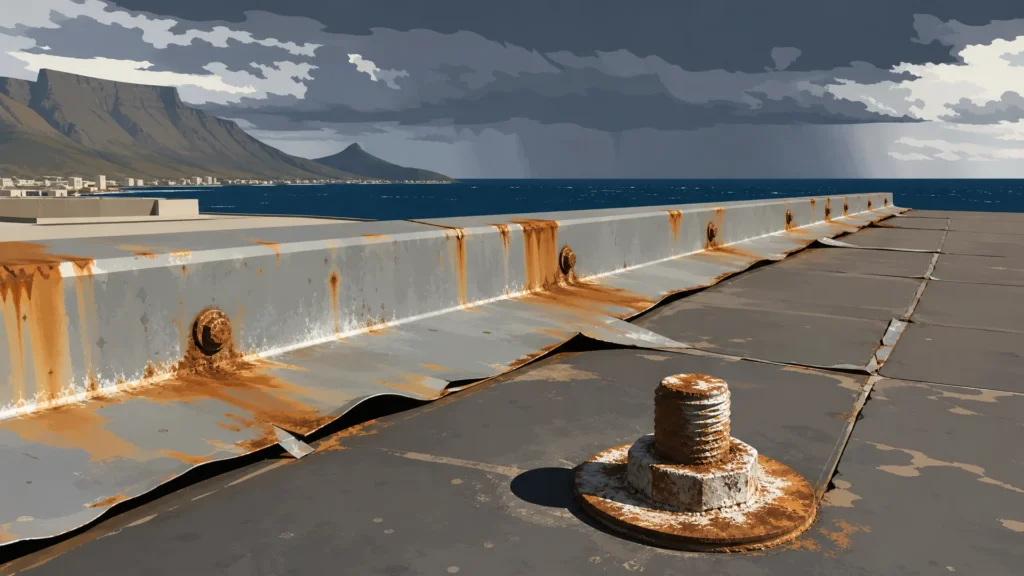
Salt spray is the most underestimated threat. Airborne salt settles on exposed fasteners, flashing, and metal sheeting, and corrosion sets in well beyond what a dry inland climate would produce. Once rust takes hold at a fastener head or seam, water finds its way in even if the surrounding membrane looks intact.
Wind is the second stressor, and it’s a big one in Cape Town. The strong summer south-easter is a common cause of lifted flashing and loosened sheeting on industrial roofs, an issue routine inspections catch before it becomes a full leak. Left unchecked, a small lift at a joint can turn into a torn sheet or a stripped membrane edge during the next big blow.
UV exposure rounds out the trio. Constant sun exposure dries out membranes and sealants, making them brittle and prone to cracking. Combined with salt and wind, this creates a compounding effect: a roof that might have had a long service life inland can deteriorate noticeably faster on the coast without proper upkeep.
How Neglect Turns Into Emergency Repairs
Roof problems rarely start big. A hairline crack in a membrane, a slightly lifted flashing edge, a blocked drain: each is minor on its own. Left alone through a wet Cape Town winter, though, any one of them can turn into a leak that damages stock, stationery, equipment, or ceiling structures. Emergency roof repairs after a leak has already damaged goods or equipment typically cost several times more than the equivalent scheduled maintenance visit would have. That gap between a small maintenance line item and a full emergency repair bill is the cost-benefit case for preventative maintenance in a single sentence.
Building a Roof Maintenance Schedule for Commercial Buildings
A workable roof maintenance schedule for commercial buildings doesn’t need to be complicated. It needs to be consistent. Most facility managers get the best results from a three-tier cadence: monthly visual walk-throughs, quarterly deeper checks, and one full professional inspection each year.
Monthly Roof Maintenance Checklist
A monthly roof maintenance checklist should be quick enough that facilities staff can complete it without specialist tools, but thorough enough to catch anything urgent:
- Clear leaves, debris, and sediment from drains and gutters
- Check for standing or ponding water after rain
- Look for visible rust streaks near fasteners or seams
- Scan for lifted or loose flashing at parapets and roof edges
- Note any new cracking, blistering, or discolouration on the membrane
- Check rooftop equipment mounts and penetrations for gaps or wear
Any item flagged during a monthly check should be logged, photographed, and tracked, even if it doesn’t need immediate action.
Quarterly and Annual Tasks
Quarterly checks go a level deeper. They should include a closer inspection of seams and laps, a check of sealant condition around all penetrations, and a review of any items flagged in the previous three monthly walk-throughs to see if they’ve worsened. This is also a sensible point to review commercial roof waterproofing options if any areas are showing early signs of wear.
The annual task is a full professional inspection, ideally timed before winter. This should cover the whole roof system, structural fixings, drainage capacity, and membrane integrity, with a written report and photographic record that can be compared year over year. That comparison is what turns a maintenance schedule from a box-ticking exercise into a genuine early-warning system.
Seasonal Maintenance Best Practices for Coastal Properties
Cape Town’s two distinct seasons each place different demands on a roof, so maintenance timing matters as much as the tasks themselves.
Preparing for Winter Rains
Before the wet season sets in, drains and gutters need to be completely clear. A blocked outlet during heavy rain causes ponding, and ponding stresses membranes and loads structures far faster than steady drainage would. Flashing and seals around parapets, skylights, and rooftop units should also be checked and resealed if needed, since these are the points most likely to let water through once the rain starts in earnest. Reviewing seasonal roof leak prevention tips alongside this pre-winter check gives a more complete picture of what to prioritise before the rains arrive.
Managing Summer Wind and Heat
Summer brings a different set of risks. Wind uplift checks matter most here, particularly around flashing edges, sheeting laps, and any loosely fixed rooftop equipment that could act as a sail in a strong south-easter. Heat and UV exposure also call for a check of membrane flexibility and sealant condition, since materials that have dried out over summer are more prone to cracking under thermal movement. Scheduling a mid-summer check specifically for wind-related lifting, separate from the general quarterly review, catches problems before the windiest months do real damage.
Commercial Roof Inspection Costs in Cape Town and What Affects Them
There’s no single flat rate for a commercial roof inspection, because the variables genuinely change what’s involved. Roof size is the most obvious factor: a small retail unit roof takes a fraction of the time a large industrial warehouse roof does. Access difficulty matters just as much. A roof with easy ladder access and clear walkways costs less to inspect properly than one requiring scaffolding, harnessing, or specialist access equipment.
Roof type also plays a role. Torch-on membrane roofs, IBR sheeting, and other membrane systems each require different inspection techniques and, in some cases, different specialist knowledge to assess properly. A comparison of torch-on waterproofing methods can help property owners understand why inspection approaches differ between systems.
What’s worth keeping in view is the comparison that actually matters: preventative inspection cost versus emergency repair cost. A scheduled inspection is a planned, budgeted expense. An emergency repair, especially one involving water damage to stock or equipment, is unplanned, urgent, and typically far more expensive. Framed that way, the cost of commercial roof inspections in Cape Town is insurance against a much larger bill later, not a discretionary expense.
Red Flags a Roof Inspection Should Catch Early
Some warning signs are visible to anyone doing a monthly walk-through. Others need a trained eye. Either way, catching them early is what keeps a roof maintenance plan working as intended.
Watch for:
- Ponding water that doesn’t drain within a day or two of rain
- Rust streaks running down from fasteners, seams, or metal flashing
- Blistering or bubbling on membrane surfaces, often a sign of trapped moisture
- Loose or lifted flashing, particularly around parapets and edges after windy periods
- Cracked or brittle sealant around penetrations and rooftop fittings
- Visible daylight or staining on ceilings below the roofline
A coastal warehouse roof exposed to salt spray without regular maintenance can show visible fastener corrosion and membrane degradation within just a few years. A well-maintained roof under the same conditions routinely lasts well past its original design life. That difference alone makes a strong case for catching these signs early rather than waiting for a leak to appear indoors.
Signs You Need a Professional Inspection Now
Some situations shouldn’t wait for the next scheduled check. If ponding water has been present for more than a few days, if rust has spread beyond a single fastener, if flashing has visibly lifted after a windstorm, or if there’s any sign of water staining inside the building, call in a professional rather than continuing with DIY monitoring. In these cases, a decision framework for repairing vs replacing a roof can help property owners work out whether a targeted repair will do, or whether the damage points to something more extensive.
Building a Preventative Roof Maintenance Plan With a Contractor
A roof maintenance plan for commercial property should be a written agreement, not an informal arrangement. It should specify inspection frequency, exactly what gets checked at each visit, response times for flagged issues, and how findings are documented and reported back to the property owner or facility manager.
Choosing Industrial Roof Maintenance Contractors in Cape Town
Not all industrial roof maintenance contractors have equal experience with coastal conditions. When vetting a contractor, ask about their direct experience with salt spray corrosion, wind uplift damage, and UV-related membrane wear specifically, rather than general roofing experience alone. Wilco Te Cape Town’s teams have serviced commercial and industrial roofs across the Cape Town metro, from harbour-adjacent warehouses to inland retail parks, and that gives them direct insight into how salt air, wind uplift, and UV exposure affect different roof systems. That kind of localised experience matters more on the coast than it does elsewhere, because the failure modes are different.
It’s also worth asking whether a contractor offers broader support beyond the roof itself. Many property owners find it more efficient to bundle roof maintenance with wider industrial building maintenance services, since drainage, structural, and building envelope issues are often connected.
How a Maintenance Plan Extends Roof Lifespan
Regular maintenance extends the lifespan of a commercial roof by catching small issues while they’re still cheap and simple to fix. A loose flashing edge resealed in a quarterly check costs little. That same flashing edge, left to fail during a winter storm, can lead to a full membrane replacement in that section, plus interior repairs and possible business disruption. Over the working life of a building, consistent maintenance can make the difference between a roof that needs full replacement well ahead of schedule and one that reaches, or exceeds, its intended service life.
For property owners further along in the decision process, comparing ongoing maintenance costs against roof replacement cost estimates often makes the value of preventative care clearer in concrete terms.
If your commercial or industrial roof hasn’t had a proper inspection recently, or if you want a structured maintenance plan built around Cape Town’s specific climate risks, arrange a professional assessment before the next wind or rain season tests the weak points for you. Wilco Te Cape Town offers free roof inspections and maintenance plan quotes for commercial and industrial properties across the Cape Town metro, along with commercial building waterproofing services for buildings that need more than routine upkeep. Getting ahead of salt corrosion, wind damage, and UV wear now is a straightforward way to protect the building and the budget for years to come.