
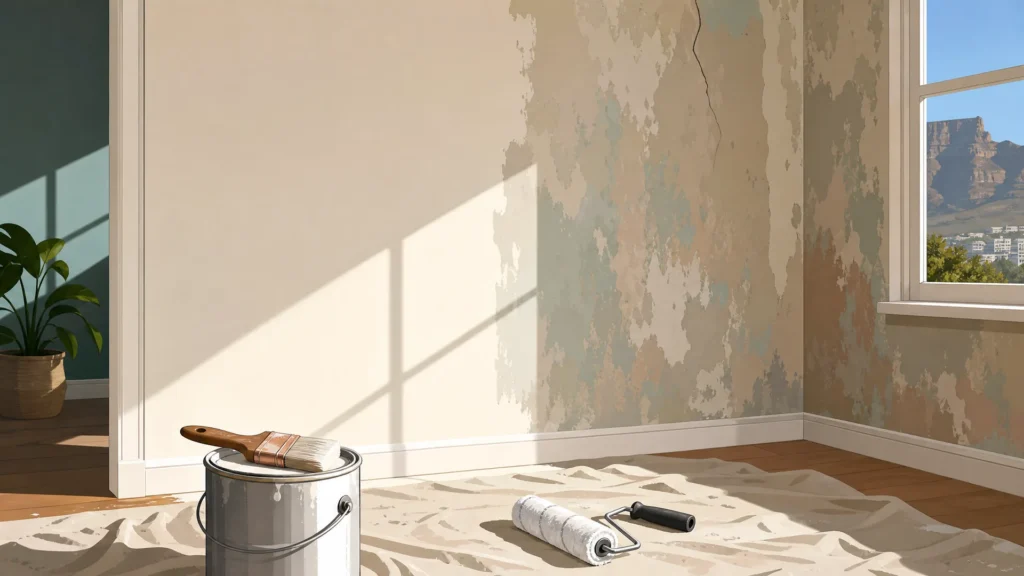
Getting a straight answer on interior house painting cost in Cape Town is harder than it should be. Most quotes online give a wide range and stop there. This guide breaks the cost down by room, by paint grade, and by the prep work that quietly makes one quote double another. If you want a number you can actually plan a budget around, read on.
How Much Does Interior Painting Cost in Cape Town?
Interior painting jobs in Cape Town generally fall into three tiers: budget, mid-range, and premium. A budget job uses economy paint, minimal prep, and a single coat over sound walls. A mid-range job uses a quality local emulsion, two coats, and basic crack filling. A premium job includes full surface stabilising, primer, specialist paint for damp-prone or high-traffic areas, and a more experienced painting crew.
Where your project lands on that scale depends on wall condition, ceiling height, colour change, and how much furniture and trim work is involved. A freshly plastered new-build costs far less to paint than a 1930s home in Observatory with layers of old lime-wash. No single number is honest without context. That’s why an on-site assessment matters more than a phone quote.
Interior Painting Price Per Square Metre in Cape Town
Painters typically price interior work per square metre of wall and ceiling area, not per room. This rate covers labour and materials together, though some contractors separate the two.
The per-m² rate moves up or down based on a few things: the paint brand and grade specified, the number of coats needed, wall texture, and how much masking and furniture protection the job requires. A smooth, previously painted wall in good condition sits at the lower end of the scale. A textured or damaged wall needing filler and sanding sits at the higher end, sometimes considerably so.
These variables shift from house to house. So comparing “price per square metre” between quotes only works if you’re also comparing prep scope and paint tier. A cheap rate on a poorly prepped wall in a low-grade paint is not the same job as a mid-tier rate with two coats over a properly primed surface.
Cost to Paint a Room in Cape Town: Room-by-Room Breakdown
Room size is the obvious cost driver, but it’s not the only one. Ceiling height, the number of doors and windows to cut in around, and built-in cupboards or tiling all add labour time. Labour is most of what you’re paying for.
Bedroom, Lounge and Kitchen Painting Costs
A standard Cape Town bedroom, roughly 3×3 metres, typically needs about one day of prep and painting for a two-coat job on walls in reasonable condition. That’s a useful baseline for budgeting a single-room repaint.
Lounges and open-plan living areas cost more simply because they’re bigger and often have higher ceilings or double-volume walls. Kitchens add another layer of complexity. Cabinetry cut-ins, tiled splashbacks, and grease-affected walls near the stove all slow the work down. An open-plan lounge or kitchen with cabinetry cut-ins can stretch a job from one day to two or three. That directly affects the labour portion of the quote.
If you’re working with a smaller footprint, it’s worth looking at interior painting ideas for small rooms before you finalise colour and finish choices. Lighter finishes in tight spaces can reduce the number of coats needed to get even coverage.
Bathroom and Ceiling Painting Costs
Bathrooms are small, but they’re rarely cheap to repaint per square metre. Moisture exposure means painters often need a specialist bathroom-grade paint, extra masking around fittings, and sometimes mould treatment before the first coat goes on. If there’s any sign of water damage, it’s worth checking waterproofing considerations before repainting a bathroom first. Painting over an active moisture problem just means redoing the job sooner.
Ceilings, especially textured or previously water-stained ones, usually cost more per square metre than walls. The overhead angle slows the work down, and stained ceilings often need a stain-blocking primer before topcoat. That’s an extra step most homeowners don’t budget for upfront.
What Factors Cause Interior Painting Quotes to Vary
Two contractors can walk through the same house and come back with quotes that differ by a wide margin. That’s not necessarily one of them overcharging. It usually comes down to what’s included.
Surface Prep, Primer and Number of Coats
Prep work is the single biggest hidden variable in any interior painting estimate in Cape Town. Filling cracks, sanding rough patches, washing down grease or nicotine staining, and applying primer all take time before any topcoat goes on. But they’re what makes a paint job last.
Homes in older Cape Town suburbs such as Observatory or Woodstock often carry higher prep costs. Flaking lime-wash or damp-damaged plaster needs stripping and stabilising before a single coat goes on, and skipping that step just means the new paint fails faster. If damp is part of the picture, it’s worth reading about dealing with rising or penetrating damp before painting, since painting over damp walls without treating the source is one of the most common causes of early paint failure. For a broader look at why this stage matters across any paint job, see why surface prep is critical to a lasting paint job.
Coat count matters too. Two coats of quality emulsion is the standard minimum for even coverage on previously painted walls. Three coats are often needed over dark colours, bare plaster, or patched repairs. Each extra coat adds both material and labour cost.
Paint Grade and Best Interior Paint Brands in South Africa
Paint tier is the other major swing factor. Economy paints cost less per litre but often need an extra coat to achieve even coverage, which can erase the initial saving. Mid-range and premium local brands generally offer better coverage, washability, and colour retention over time.
South African painters commonly work with recognised local brands across different grades, choosing the tier based on the room’s use and the client’s budget. A passage or spare room might get a standard-grade emulsion, while a high-traffic lounge or a kitchen exposed to steam and grease benefits from a tougher, washable premium finish.
Beyond paint and prep, a full quote should also account for furniture moving and protection, masking of floors and fittings, and disposal of old paint tins and drop sheets. These are small line items individually, but they add up. A quote that omits them isn’t necessarily cheaper, just less complete.
Professional Interior Painter vs DIY: Which Costs Less in Cape Town?
DIY painting looks like the cheaper option on paper. You skip the labour cost entirely and just pay for materials. In practice, the gap narrows once you account for tools, time, and the risk of redoing sections that didn’t go to plan.
A DIY painter needs to buy or hire rollers, brushes, extension poles, drop sheets, masking tape, filler, sandpaper, and often a ladder for ceiling and stairwell work. A professional already has those costs covered in their rate. Add in the time cost of a job that takes a professional crew one day but might take an inexperienced homeowner a full weekend, and the “savings” shrink further.
Mistakes also cost money to fix. Uneven coverage, visible roller marks, paint on skirtings or light fittings, and poor cutting-in around corners are common DIY outcomes. They either get lived with or repainted, sometimes by a professional called in afterward.
When Hiring Painting Contractors in Cape Town Makes Financial Sense
Hiring makes the most financial sense when the job involves more than a single flat wall: high ceilings, cabinetry cut-ins, damp-affected plaster, or a colour change that needs full coverage over a dark existing shade. These are exactly the jobs where an inexperienced DIY attempt tends to go over budget in materials and time.
It also makes sense when you value a fixed, guaranteed outcome over an open-ended weekend project. A professional interior painter in Cape Town prices the job once, based on an accurate assessment of the work involved, and stands behind the finish.
How to Get and Compare an Interior Painting Quote in Cape Town
Not all quotes are built the same way. Comparing them line by line matters more than comparing the bottom-line number.
Ask each contractor whether their quote is itemised or a lump sum. An itemised quote should specify the paint brand and grade, the number of coats, what prep work is included, and whether furniture moving and cleanup are covered. A lump-sum quote with no breakdown makes it hard to know what you’re actually paying for, and hard to catch corners that might get cut.
Painting a House Interior Checklist Before You Call a Contractor
Before you call painting contractors in Cape Town for quotes, walk through your home and note the following:
- Which rooms need painting, and their approximate size
- Any visible cracking, flaking, or water staining on walls or ceilings
- Whether you’re changing colour significantly (light to dark, or vice versa)
- Fixtures or cabinetry that will need masking or removal
- Whether bathrooms or kitchens involved have any damp history
- Your preferred paint brand or finish, if you have one
Having this ready means each contractor is quoting on the same scope, which makes comparing their prices far more meaningful.
How Long Does Interior Painting Take?
Timeframes scale with home size and prep needs rather than following a fixed formula. A single bedroom in reasonable condition typically takes about a day. A full three-bedroom home with standard prep often takes a crew somewhere between three and five working days, factoring in drying time between coats.
Homes needing significant prep, such as damp treatment, crack repair, or ceiling stain-blocking, take longer, since that work has to happen and cure before painting starts. Getting an accurate timeframe from your contractor upfront helps you plan around the disruption, especially if you’re painting a home you’re still living in.
Get an Accurate Interior Painting Estimate From Wilcote Cape Town
Every factor covered here, wall condition, paint grade, coat count, room complexity, is exactly what a generic per-square-metre estimate can’t account for. That’s why Wilcote Cape Town’s quoting process includes a physical site inspection. A representative measures wall area, checks surface condition for damp, cracking, or flaking, and confirms the paint grade with you before issuing a fixed price. No phone-in guesswork, no vague range.
If you’re weighing up interior against exterior work at the same time, the full exterior and interior house painting cost guide covers how the two budgets typically compare. And for the bigger picture on what Wilcote offers beyond a single room repaint, take a look at professional house painting services in Cape Town, including options for larger residential or mixed-use properties, where commercial painting contractors in Cape Town expertise applies.
Ready for a number you can actually plan around? Request a free, itemised interior painting quote from Wilcote Cape Town and get a fixed price based on your home, not an average.