
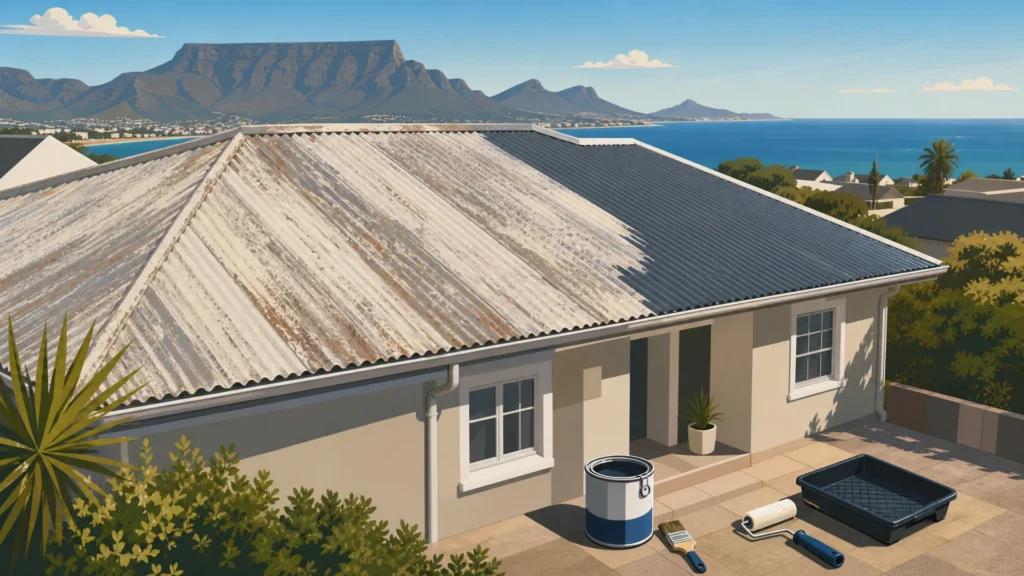
A tired, chalky roof is one of the most visible signs of a home ageing before its time. For many Cape Town property owners, roof painting is the difference between a roof that quietly deteriorates and one that gets another decade of solid protection. It costs a fraction of full replacement. But that’s only true when it’s done with the right paint system and proper preparation.
This guide walks through what actually goes into roof painting in Cape Town: the paint types suited to different roof materials, realistic cost drivers, the application process, and how to tell when painting makes sense versus when replacement is the smarter call. Wilco Te Cape Town’s crews work across IBR, tile, and flat concrete roofs throughout the Cape Peninsula, from coastal suburbs exposed to salt air to inland areas facing intense UV. That range of conditions shapes almost every recommendation below.
Roof Paint Types for Cape Town Homes: IBR, Tile & Flat Roofs
Not all roof paint is interchangeable. The right product depends on what the roof is made of, how it expands and contracts, and how much moisture it’s exposed to. Generic painting advice tends to fall short here, because roof paint types in South Africa are built around specific substrates, not a one-size-fits-all coating.
IBR Roof Painting Cape Town: What to Use and Why
IBR sheeting is corrugated metal, so the biggest enemy is rust. Roof painting for IBR roofs in Cape Town starts with a rust-inhibiting primer. It’s usually a metal-etch or zinc-rich formulation that bonds to bare steel and stops corrosion from spreading under the topcoat.
Once primed, the topcoat needs to flex with the metal as it heats and cools through the day. A rigid paint will crack along the ridges within a season or two. Most contractors use a specialised metal roof enamel or acrylic membrane designed for corrugated profiles, applied in at least two coats to get even coverage into the ribs and laps.
Tile Roof Painting vs Flat Roof Paint Cape Town
Tile roofs behave differently from metal. Concrete and clay tiles are porous, so the coating needs to be breathable rather than a sealed membrane. A breathable acrylic tile paint lets trapped moisture escape from underneath while still shedding rainwater and blocking UV. Sealing tiles with the wrong product can trap damp. That causes the coating to blister or peel within a year.
Flat and low-slope concrete roofs face a different problem: standing water. Here, an elastomeric roof coating in Cape Town is the standard choice. These coatings stretch and rebound, bridging small cracks and hairline movement joints that would otherwise let water in. They also form a continuous waterproof membrane rather than a decorative layer. That’s why people usually discuss flat roof paint in Cape Town alongside waterproofing rather than as ordinary painting.
Roof Painting Cost Cape Town: What Homeowners and Commercial Clients Should Budget For
There’s no single number that answers what roof painting costs in Cape Town. The price depends on several variables that differ from one property to the next. What’s more useful than a flat rate is understanding what actually moves the price up or down.
Cost Factors: Roof Size, Access, Condition and Paint Grade
Roof size sets the baseline, but it isn’t the only factor. Access matters just as much. A single-storey home with easy ladder access costs far less to paint than a double-storey property needing scaffolding or rope access.
Condition is often the biggest swing factor. A roof with surface dust and light weathering needs a quick wash and one or two coats. A roof with rust bloom, moss growth, or damaged tiles needs scraping, treatment, spot repairs, and extra primer before paint even goes on. That prep work can account for a large share of the total job.
Paint grade plays a role too. Premium acrylic and elastomeric systems cost more per litre than basic enamels, but they typically last longer and need fewer recoats. A typical 150m² IBR roof repaint in Cape Town, once rust treatment and primer are factored in, sits in a noticeably different price bracket than a straightforward tile roof reseal. Homeowners often only discover that gap after getting quotes. Comparing multiple quotes side by side, ideally after a proper site inspection, is the only reliable way to know where a specific roof will land.
Commercial Roof Painting Cape Town: Budgeting for Larger Sites
Commercial roof painting in Cape Town scales differently to residential jobs. Larger roof areas bring economies of scale on materials, but they also bring added costs around access equipment, safety compliance, and working around occupied buildings or operational hours.
Industrial and commercial sites often need harnessing systems, edge protection, and scheduled work windows to avoid disrupting business. These requirements add cost on top of the paint and labour itself. For property managers overseeing multiple buildings, working from a commercial roof maintenance schedule helps spread painting cycles across budgets instead of facing one large expense.
Roof Painting vs Roof Replacement: How to Decide
Roof painting only makes sense if the roof underneath is structurally sound. Paint restores surface protection and appearance, but it cannot fix a compromised roof.
The key questions are age, rust extent, and structural condition. If IBR sheeting has surface rust that hasn’t perforated the metal, painting after proper rust treatment is usually the right call. If rust has eaten through the steel in multiple places, no coating will hold. Replacement becomes the safer option.
For tile roofs, the question is whether tiles are cracked, slipping, or brittle from age. A few damaged tiles can be replaced before painting. Widespread tile failure points toward a re-roof instead. Roof age is a useful sense check too. A roof nearing the end of its expected service life may not justify the cost of a repaint if replacement is only a few years away regardless.
Weighing these factors against price is easier when comparing costs against a full roof replacement directly, since painting only pays off when it meaningfully delays that bigger expense. For a structured way to work through the decision, our repair-vs-replace decision framework breaks down the criteria step by step. And a full roof inspection checklist can confirm which category a specific roof falls into before committing to either option.
Roof Painting Preparation and Application Process, Step by Step
Preparation is where most roof painting jobs succeed or fail. Paint applied over dirt, rust, or moss looks fine for a few months. Then it peels or blisters as those underlying problems push through.
Surface Cleaning, Rust Treatment and Priming
The process starts with a full wash to remove dust, algae, lichen, and salt residue. This matters most near the coast, where salt air builds up on surfaces quickly. High-pressure washing is standard, though tiles need gentler pressure to avoid dislodging or cracking them.
Next comes rust and moss treatment. Rusted IBR sections get wire-brushed or ground back to bare metal, then treated with a rust converter before priming. Moss and lichen on tiles get scraped and treated with a fungicidal wash so growth doesn’t return under the new coating. This stage matters more than most people expect. Why surface cleaning is critical to any paint job applies just as much to roofs as it does to walls and facades. Skipping it undermines everything applied afterward.
Priming follows once the surface is clean and dry. Metal roofs get a rust-inhibiting primer over any exposed steel. Porous tile and concrete surfaces sometimes need a penetrating primer or sealer to even out absorption before the topcoat goes on.
Coating Application and Curing in Cape Town’s Climate
Cape Town’s weather adds a real constraint to scheduling. Coatings need dry, wind-calm conditions to cure properly, and the region’s strong south-easter can carry dust onto wet paint or dry it unevenly. Winter rain narrows the working window further, since most coatings need a rain-free curing period after application.
Contractors typically apply two coats, allowing full drying time between each rather than rushing a second coat over a tacky first one. Getting this sequencing wrong is one of the most common causes of early coating failure. That’s a big part of why timing roof painting for Cape Town’s drier months tends to produce better long-term results.
How Long Does Roof Paint Last in Cape Town’s Climate?
Well-prepared and correctly applied roof coatings generally add somewhere in the range of 10 to 15 years of protection before a full roof replacement becomes necessary. That range shifts with roof material and coating quality.
Cape Town’s specific climate shortens or extends that range depending on location. Cape Town’s south-easter wind, combined with strong summer UV and salt-laden coastal air, breaks down coatings faster than in more sheltered inland cities. That’s why local contractors favour specific elastomeric and acrylic formulations over generic products bought off a general hardware shelf.
Properties right on the coast, exposed to salt spray and constant wind, tend to see coatings wear faster than inland homes with similar roofs. Regular light maintenance, rather than waiting for visible failure, is what actually extends roof lifespan in Cape Town conditions. Folding roof checks into seasonal roof maintenance to prevent leaks catches early wear before it turns into a full repaint or a leak repair.
Choosing a Roof Painting Contractor in Cape Town
Not every painting contractor understands roof-specific coatings, so vetting matters more here than for standard wall painting. Ask for references from similar roof types and ages, not just general painting work. A contractor experienced with IBR rust treatment isn’t automatically equipped to handle a flat concrete roof needing elastomeric waterproofing.
Warranty terms are worth checking closely. A reputable roof painting contractor in Cape Town should stand behind both the paint system and the labour, not just the product itself. Safety compliance matters too, especially for double-storey homes or commercial sites needing scaffolding or harness systems.
When to Combine Roof Painting With Waterproofing
Flat and low-slope roofs in particular benefit from combining a paint job with a waterproofing check. Homeowners who combine roof painting with a waterproofing inspection during the same visit typically avoid a second round of scaffolding and labour costs later.
This matters most before winter, when a roof needs to handle sustained rain rather than isolated showers. For flat concrete roofs, reviewing flat roof waterproofing options and costs alongside a painting quote often reveals overlap in the work needed, since elastomeric coatings and waterproofing membranes address similar problems. Older torch-on systems nearing the end of their service life may also need attention. Torch-on waterproofing for wet-season protection is worth reviewing as part of the same site visit rather than as a separate project down the line.
Getting a professional assessment before committing to either service is the safest route. A trained eye can spot which roof sections need painting only, which need waterproofing, and which need both. Wilco Te Cape Town offers free roof assessments for homeowners and commercial property owners across Cape Town. They cover paint condition, structural checks, and waterproofing needs in a single visit, so the resulting quote reflects exactly what the roof needs rather than guesswork.