
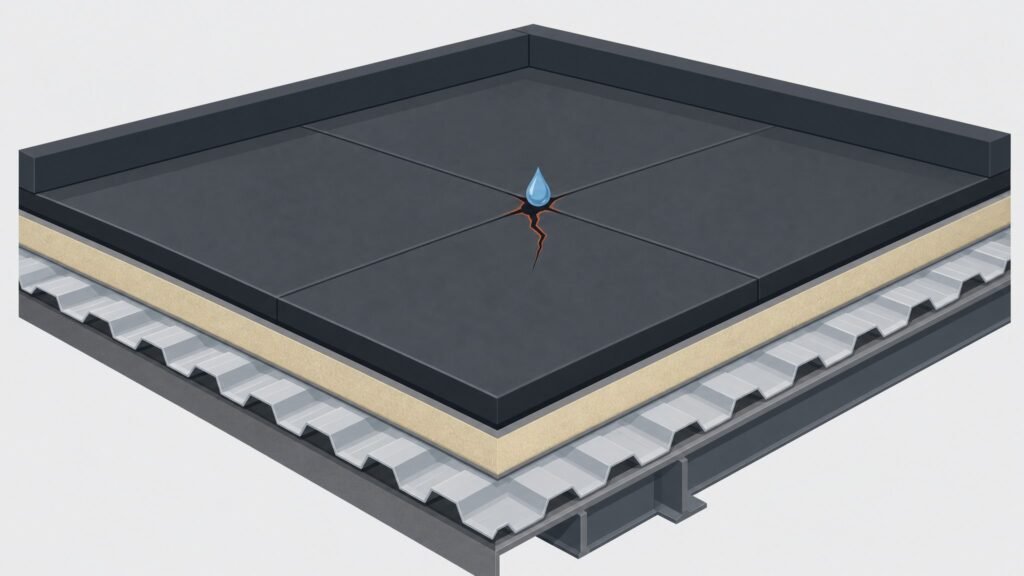
Roof leaks trigger an immediate fear of total replacement. Yet many apparent failures stem from surface wear rather than structural collapse. Recognizing the signs your roof needs waterproofing, not replacement, lets property owners fix moisture problems through targeted restoration instead of a capital-intensive rebuild. That distinction matters for commercial and industrial facilities where downtime costs money, and for homeowners who want to protect the value of their property without spending more than they have to. Knowing when waterproofing is enough means reading the physical cues that separate membrane fatigue from decking failure.
Distinguishing Surface Damage from Structural Failure
Whether a leak calls for repair or replacement comes down to one question: is the substrate underneath still sound? Water damage confined to the top layer is a different problem from rot that has worked into the building envelope. Look past the stain on the ceiling and trace where the water actually travelled before you commit to any scope of work.
Localized Leaks vs. Widespread Saturation
An isolated leak usually points to membrane failure at a specific penetration or seam, not systemic decking rot. When water gets in through one cracked flashing or a single bad joint, the timber or concrete around it often stays dry and structurally sound. That pattern means restoring the waterproofing layer will likely fix the problem without disturbing the structure beneath it.
Widespread saturation is a different story. If moisture readings run high across large sections of the deck, or ceiling stains shift with rainfall across multiple zones, the substrate itself may be too far gone to save. Sagging between joists, or visible deflection in a concrete slab, confirms the load-bearing elements have been soaking up water for a while. At that point you need full replacement no matter what shape the membrane is in.
Membrane Blisters and Seam Separation
Blisters form when trapped moisture heats up in the sun and turns to vapor, lifting the membrane off the substrate as it expands. They look alarming, but blistering usually means adhesion loss in the waterproofing system itself, not decay in the deck below. A professional assessment can tell you whether the blisters are cosmetic or a sign of moisture trapped deep enough to undermine an overlay.
Seam separation in torch-on systems is more often caused by thermal cycling or a flawed original installation than by structural movement. These failures let water in directly, but they leave the main roof assembly intact. Re-torching or patching the seam restores watertightness, as long as the rest of the system still has good adhesion.
Early Signs Roof Damage Is Limited to the Membrane
A close visual inspection shows whether deterioration has stayed in the protective layer or pushed into the structure underneath. Catching it while it’s still superficial is what makes cost-effective intervention possible. Spotting membrane-specific wear early is the difference between a maintenance bill and a capital project.
Cracking in Torch-On or Bitumen Layers
Alligatoring shows up as a web of interconnected cracks that look like reptile skin across aged bitumen. It signals UV damage and the loss of plasticizers in the waterproofing compound, meaning the membrane has reached the end of its working life. Alligatoring generally affects only the exposed surface. The substrate underneath is typically fine, unless an active leak has been running long enough to cause damage of its own.
Surface cracking and structural cracking are not the same thing. Hairline fractures that simply follow the membrane’s texture point to material aging. Deep fissures that mirror the joints or edges of the slab beneath point to substrate movement. The first responds to resurfacing. The second needs a structural evaluation before any waterproofing goes down.
Flashing and Parapet Wall Deterioration
Perimeter details fail more often than the field membrane, because vertical walls and horizontal decks move differently in the heat. Lifted flashing, cracked sealant at parapet caps, or spalling masonry at the base of a wall all create entry points that can look like widespread roof failure. In reality, these issues concentrate water intrusion at the edges while the central roof area stays functional.
Fixing the perimeter often resolves leak complaints without touching the main membrane at all. Parapet wall waterproofing solutions target these specific failure points with detailing built to handle thermal expansion and settlement. Restoring the edge conditions extends the roof’s service life, provided the field membrane still has adequate thickness and adhesion.
When Waterproofing Is Enough to Extend Roof Lifespan
Restoration only works when the technical evidence confirms the existing substrate can carry a new membrane. Waterproof over compromised decking and you’re just delaying the inevitable failure. You need proof the substrate is suitable before any overlay goes on.
Assessing Substrate Integrity for Overlay
Torch-on membrane systems applied over sound concrete decks can restore watertight integrity without removing the existing structure, as long as moisture content stays below critical thresholds. Moisture testing, whether by electronic scanning or calcium chloride tests, tells you whether trapped water would vaporize and wreck the bond of a new membrane. Adhesion pull-tests on the existing surface confirm that old coatings or primers won’t delaminate under the weight of the new one.
How well the substrate is prepared determines how long the overlay lasts. Loose material, biological growth, and any incompatible old coating need to come off mechanically before anything bonds properly. Where the tests confirm dryness and good adhesion potential, an overlay can add decades of service life at a fraction of the cost of replacement. It works best when it’s caught during routine maintenance, not after a leak has already soaked the deck.
Cost Benefits of Restoration Over Replacement
Restorative waterproofing typically costs significantly less than full replacement, because it skips the demolition, disposal, and new decking material that replacement requires. Labor shifts from tear-off and reconstruction to surface prep and membrane application, which cuts both project time and disruption on site. For a commercial operation, that means staying productive while the work happens.
Restoration is the better use of budget once a structural assessment confirms it’s viable. Capital reserves go further on preventative maintenance than on emergency replacements brought on by deferred care. The case gets stronger still when you consider that a properly executed overlay can carry warranty terms comparable to a new installation, for a lower upfront cost.
Roof Maintenance Warning Signs That Precede Major Failure
Subtle signs show up long before a leak does, and they give you a window to act before the damage becomes structural. Ignore them and a manageable maintenance item turns into a replacement job.
Ponding water on flat roofs often points to a drainage or settlement problem that waterproofing alone can’t fix. The structure needs to be leveled before any membrane goes down. Standing water wears down a membrane through constant hydrostatic pressure, and through freeze-thaw cycles in colder months. Fixing the drainage slope, whether with tapered insulation or screed repairs, restores proper flow before the membrane fails outright.
Biological growth is a sign that moisture is sticking around. Moss, algae, and fungal colonies only take hold where dampness lingers past a normal drying cycle. Their presence maps out moisture patterns you wouldn’t spot on a casual inspection, and points you toward where drainage correction or surface treatment is needed before organic acids start eating into the membrane.
Interior staining tells you about a leak’s history even when the exterior looks fine. Discoloration that shows up seasonally, or gets worse after a specific wind-driven rain event, pinpoints where the water is getting in. Keeping track of these patterns helps a professional match what’s happening inside to conditions outside, and focuses the diagnosis where it actually helps.
A comprehensive roof inspection checklist is a useful way to document these warning signs systematically before they get worse. Regular records give you a baseline that separates new damage from old wear when it’s time for a professional assessment.
Comparing Roof Waterproofing vs Replacement Costs
Weighing waterproofing against replacement means looking past the initial quote, because the real cost differences involve more than the material invoice. Budget planning should account for the indirect expenses that hit replacement projects hardest.
Long-Term Value of Preventative Coating
A preventative coating pays off through a longer asset life and fewer emergency repairs. Restoration on a schedule spreads the cost across decades instead of concentrating it into one replacement event. That predictability helps with long-term facility planning and reserve fund management, for commercial portfolios and residential properties alike.
Energy efficiency is a side benefit. A reflective membrane surface cuts cooling loads in summer, lowering running costs for as long as the restored system lasts. Those savings add up year after year, which improves the return on the restoration beyond just stopping leaks.
Hidden Expenses of Full Tear-Offs
Demolition brings costs that rarely show up in a preliminary estimate. Waste disposal fees scale with roof area and material type, and climb further if asbestos-containing materials need special handling. Business interruption adds to the direct expenses when operations have to relocate or pause during a long replacement timeline.
Structural problems often only show up once the decking is exposed. Rotted timber, corroded fasteners, or spalled concrete discovered mid-project trigger change orders that push the budget past what was approved. Restoration avoids this risk by keeping the existing substrate in place, so the financial exposure is limited to what pre-application testing has already verified.
For pricing specific to your roof type, flat roof waterproofing options and costs is worth reviewing before you talk budget with a contractor. Knowing the market rate helps you avoid both underfunding a legitimate project and overpaying for scope you don’t need.
Professional Assessment for Industrial and Residential Roofs
Accurate diagnosis is what separates a genuine restoration candidate from a structure that needs replacing, which makes a professional evaluation non-negotiable before you commit any money. A self-assessment can identify symptoms. Only expert verification confirms the cause and the right remedy.
Moisture Mapping and Core Sampling
Diagnostic technology picks up what a visual inspection can’t. Electronic moisture meters scan the whole roof surface to map wet areas that aren’t visible from above. Core samples pull physical cross-sections that reveal moisture depth, material composition, and adhesion quality at specific spots. Together, these build a three-dimensional picture of the roof’s condition that informs which system to use.
Core sampling also validates the moisture meter readings and establishes the baseline properties of the substrate. Lab analysis shows whether the existing materials contain anything that would clash with a proposed overlay system, which heads off costly failures caused by applying a new membrane over an unsuitable base.
Selecting the Right Waterproofing System
The right system follows from the diagnosed failure mode, not a generic product preference. A high-traffic industrial roof needs different specifications than a residential terrace, even when both qualify for restoration. Matching the membrane chemistry, reinforcement type, and finish to how the roof is actually used is what makes performance match expectations.
Wilcote Cape Town specializes in torch-on waterproofing for both industrial and residential applications, with solutions aimed at extending the life of the asset. Their diagnostic process checks the substrate is suitable before recommending a system, so proposals address the actual problem rather than an assumed one. Requesting an industrial roof waterproofing quote is how that verification process starts for commercial facilities.
Ongoing care protects the restoration investment by catching emerging issues early. Commercial roof maintenance strategies set up the kind of monitoring routine that catches minor defects before they undermine the restored system.
Planning Your Roof Restoration Project in Cape Town
Local climate dictates the best time to apply waterproofing, since membrane adhesion depends on temperature and humidity during installation. Scheduling the work for a stable weather window avoids application defects that would otherwise undercut long-term performance.
When vetting a contractor, check their experience with Cape Town’s specific wind loads, UV exposure, and rainfall. Regional familiarity means the system chosen accounts for environmental stress that’s specific to the Western Cape. Warranty validity depends on the installer’s certification and on following the manufacturer’s specifications for local conditions.
An expert evaluation is what prevents a misdiagnosis that wastes money on the wrong intervention. A professional assessment tells the difference between an opportunity to renew the membrane and a genuine structural necessity, and directs the investment toward whatever actually resolves the problem.