
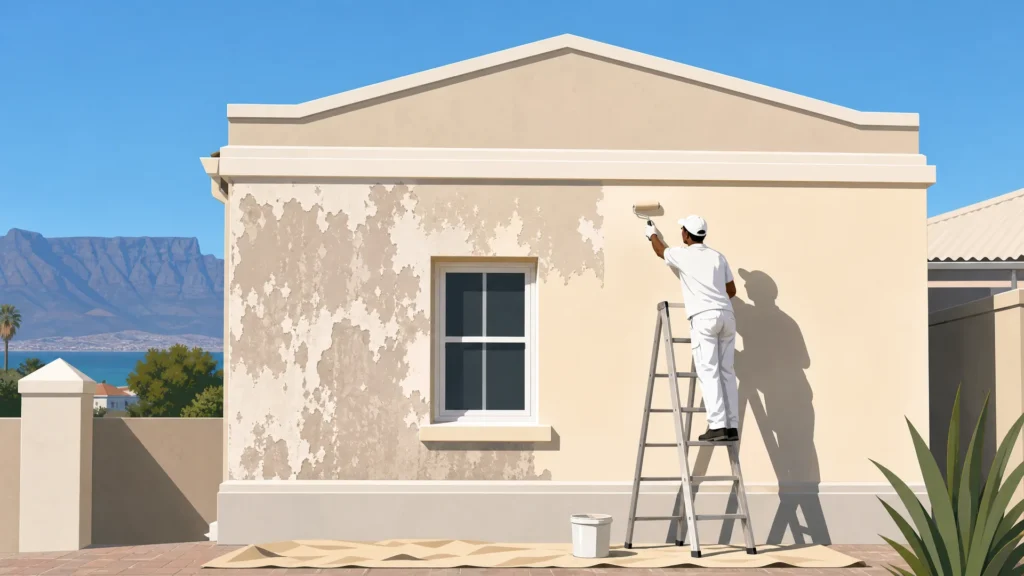
Budgeting for exterior painting in Cape Town means accounting for variables that other South African cities simply don’t have. Intense UV radiation, salt-laden winds, and a wide mix of architectural styles mean the cost to paint outside of house Cape Town properties depends more on exposure and substrate condition than on surface area alone. Our interior house painting cost guide covers protected environments, but exterior work needs specialized coatings and careful preparation to survive local weather.
This guide breaks down current pricing structures, technical specifications, and quotation standards for the Cape Town market so you can evaluate proposals with confidence.
Average Exterior Painting Cost Per Square Metre in Cape Town
Current market rates for standard masonry exteriors reflect rising material costs and stricter safety compliance requirements across the Western Cape. Expect pricing tiers rather than one flat rate. The exterior painting cost Cape Town contractors charge depends heavily on whether your property is a simple single-storey dwelling or a multi-level structure that needs specialized access equipment.
Single Storey vs Double Storey Pricing
Access is the main differentiator in residential exterior painting per square metre Cape Town estimates. Single-storey homes typically sit in the lower pricing bracket, since painters can work from ladders or ground level without extensive safety infrastructure. That means faster application and lower mobilisation fees.
Double-storey exterior painting typically costs 30-50% more than single-storey equivalents, driven by scaffolding hire, added safety compliance, and slower application at height. The premium covers the equipment itself, plus the extra labour time needed to set up, move around, and dismantle safely at height. That’s what really moves the number when you’re asking how much to paint a house exterior with a second storey involved.
Commercial and Industrial Exterior Rates
Commercial and industrial facades run on different pricing models than residential properties, because scale and operational constraints change the cost structure entirely. Large-format commercial walls often land a lower per-square-metre rate thanks to economies of scale. That saving is frequently offset by requirements for after-hours work, specialised industrial coatings, or traffic management plans that residential jobs never face.
Industrial facilities may need epoxy or polyurethane systems rather than standard acrylics. That pushes material costs up and requires certified applicators who understand chemical resistance and substrate-specific primers. Your commercial quote will likely separate labour, materials, and access costs as distinct line items rather than bundling them into a simplified residential-style rate.
Key Factors Driving Exterior House Painting Price in Cape Town
Three variables consistently push exterior house painting price Cape Town quotes above baseline estimates: substrate degradation, access complexity, and marine exposure. Knowing these helps you tell a legitimate cost driver from inflated pricing when you compare painting contractors Cape Town cost proposals.
Wall Surface Condition and Prep Work
Existing damage dictates preparation scope more than anything else in an exterior painting budget. Cracked render, spalling plaster, and old paint failure need mechanical repair, filler, and time to cure before a single litre of topcoat touches the wall. Wilcote Cape Town includes detailed surface preparation and crack repair in every exterior painting quote, to make sure the coating adheres and lasts in local weather.
Properties with significant substrate deterioration may need cracked render repair services completed days or weeks before painting starts, adding labour and material costs that don’t show up in quotes for well-maintained facades. According to paint manufacturer technical guidelines for coastal applications, skipping proper surface cleaning and primer application accounts for over 70% of exterior paint failures within two years in marine environments. Thorough preparation isn’t an optional upgrade; it’s a non-negotiable cost component.
Access Challenges and Scaffolding Costs
Height and site constraints add fixed costs that stay the same regardless of paint quality or surface area. Multi-storey homes in steep suburbs like Camps Bay or Vredehoek often need scaffolding, cherry pickers, or rope access, adding thousands of rands to a project before any application work starts. These access costs apply whether you choose a premium or budget paint system.
Tight sites with limited staging areas, overhead obstructions, or close neighbouring properties complicate logistics further and stretch out timelines. You pay for the difficulty of reaching the surface safely, not just for painting it. That’s why two identical-looking facades can land on very different quotes, based purely on physical context.
Coastal Weathering and Salt Exposure
Cape Town’s south-easterly winds and intense UV index speed up paint degradation on north- and west-facing facades, often calling for elastomeric coatings rather than standard acrylics to stop premature chalking and fading. Properties in the Atlantic Seaboard, Hout Bay, and Muizenberg face accelerated salt attack, which demands premium primers, specialised sealers, and more frequent maintenance than inland suburbs, pushing up both the initial cost and the long-term upkeep budget.
Salt-tolerant paint systems cost more upfront but extend repaint intervals by several years in marine zones, cutting lifetime spend despite the higher initial outlay. Ignore this exposure differential and you’ll likely face premature failure and repeat spending that dwarfs whatever you saved by choosing a cheaper product.
Best Paint Systems for Coastal and Sun Exposure
The coating you choose decides whether your paint job lasts three years or fifteen in Cape Town’s climate. Standard acrylics are fine for sheltered inland walls but fail fast under direct coastal conditions. Product specification matters as much as application quality when you’re calculating true exterior painting cost Cape Town value.
UV-Resistant Formulations for Cape Town Sun
North- and west-facing walls absorb intense ultraviolet radiation that breaks down polymer chains in conventional paints, causing chalking, colour loss, and eventual film breakdown. UV-stabilised acrylics and silicone-enhanced formulations resist this through advanced pigment technology and resin chemistry that holds film integrity through daily thermal cycling and sun exposure.
These premium systems cost more per litre but keep their appearance and protection for much longer on sun-blasted facades. Spending more on higher-specification paint lowers the long-term cost to paint outside of house Cape Town properties, by stretching out maintenance cycles, particularly on elevations that catch direct afternoon sun where standard products can degrade within two to three seasons.
Salt-Tolerant Coatings for Seaside Properties
Marine environments need coatings built to resist chloride penetration and alkaline substrate attack. Elastomeric and silicone-based systems form flexible, breathable membranes that move with thermal expansion while blocking salt ingress. Standard acrylics, by contrast, turn brittle and permeable under persistent marine aerosols.
Properties within 500 metres of the coastline benefit most from these specialised formulations, though even homes several kilometres inland pick up salt deposition during strong south-easterly wind events. Matching paint chemistry to actual exposure conditions prevents costly rework, and it’s what makes your exterior wall painting quote Cape Town investment hold up rather than just look good for a season.
What Is Included in a Professional Exterior Wall Painting Quote
Reputable contractors itemise every phase of work, because transparency protects both sides from disputes and shoddy outcomes. A proper exterior wall painting quote Cape Town should separate surface cleaning, crack filling, primer application, masking, and final coats into distinct line items, rather than burying them in a vague lump sum that hides what you’re actually paying for.
Leaving preparation work off a quote is a common red flag for future failure. Proper surface cleaning for paint adhesion can account for 40-60% of total labour time on older properties. Quotes promising fast completion at unusually low prices typically get there by skipping preparation, applying too few primer coats, or using diluted materials that undercut long-term performance.
You deserve documentation that names exact products, the number of coats, drying times between applications, and warranty terms tied to those specifications. Vague references to “quality paint” or “professional preparation” without technical detail suggest the contractor hasn’t properly assessed your property, or plans to substitute inferior materials once the work begins.
Signs Your Exterior Paint Needs Redoing
A visual inspection turns up problems that need addressing before repainting can succeed. Catching these symptoms early lets you budget accurately for repairs and avoid paying for cosmetic work that fails fast because the underlying issue never got fixed.
Chalking, Fading, and Peeling
Chalking residue that transfers to your hand when you touch the wall points to binder breakdown from UV exposure, the paint film no longer protects the substrate underneath. Significant colour fading on north-facing walls confirms photodegradation has gone past cosmetic concern. Peeling or flaking signals full adhesion failure that needs complete removal, not overcoating.
These symptoms rarely show up evenly across every elevation, so partial repainting can sometimes address visible damage while leaving protected areas alone. But blending new paint into faded existing coatings often looks bad, which makes complete repainting the more economical choice despite the higher upfront cost.
Cracked Render and Damp Patches
Hairline cracks in render let moisture in behind the paint film, undermining adhesion and causing blistering and delamination even when surface prep looks fine. Damp patches, tide marks, or mould growth signal active water penetration, which needs damp wall solutions before painting rather than a fresh coat to hide it.
Painting over an unresolved moisture problem guarantees fast failure and wasted money. Structural movement cracks, rising damp, and failed waterproofing membranes need specialist attention before any painter starts, and weatherproofing older Cape Town homes often overlaps with exterior painting projects on heritage or aging properties, where the substrate has to be stabilised before any cosmetic work begins.
How to Get an Accurate Exterior Painting Quote in Cape Town
Accurate pricing needs a physical assessment, because photographs can’t reveal substrate integrity, access constraints, or moisture levels, all of which affect scope and cost directly. Remote estimates based on images or descriptions tend to miss the mark, either inflating your budget unnecessarily or underestimating what the job actually needs, which leads to variation orders and disputes mid-project.
Site Assessment vs Remote Estimates
Insist on a physical site inspection from every contractor you consider. No amount of digital back-and-forth substitutes for hands-on evaluation of surface condition and access logistics. A thorough assessment takes thirty to sixty minutes and covers moisture testing, tapping the substrate to detect hollow render, measuring the actual paintable area excluding windows and doors, and spotting hazards that photos never show.
Contractors who quote without visiting your property are guessing, and their guesses protect their margins, not your interests. You risk either paying premium rates for a simple job, or accepting an artificially low bid that balloons once hidden problems surface during the work.
Comparing Detailed Breakdowns
Request at least three itemised quotes so you can spot outliers in preparation scope, paint quality, and access methodology. Compare line items rather than bottom-line totals. The cheapest overall price often excludes essential preparation steps or specifies inferior products that shorten the paint’s lifespan and raise your lifetime cost.
Big gaps between quotes usually point to different assumptions about substrate condition or scope, not genuine price competition. Ask each contractor to walk you through their methodology and justify their specifications, so you can tell which proposal actually reflects your property’s needs rather than generic guesswork.
Budgeting for Related Exterior Maintenance
Exterior painting projects often turn up adjacent repairs needed for gutters, roof flashings, window seals, or downpipes that affect how well the building sheds water. Handling these at the same time cuts overall mobilisation costs and keeps fresh paint from being undermined by ongoing water ingress from neglected fittings.
Bundling related maintenance into one project timeline gets the most value out of scaffolding hire and contractor mobilisation, and stops sequential damage from undoing fresh coatings. Gutters leaking onto newly painted walls, failed sealants letting moisture behind fresh render, or corroded flashings staining a pristine facade are false economies, they can undo your painting investment within months.