
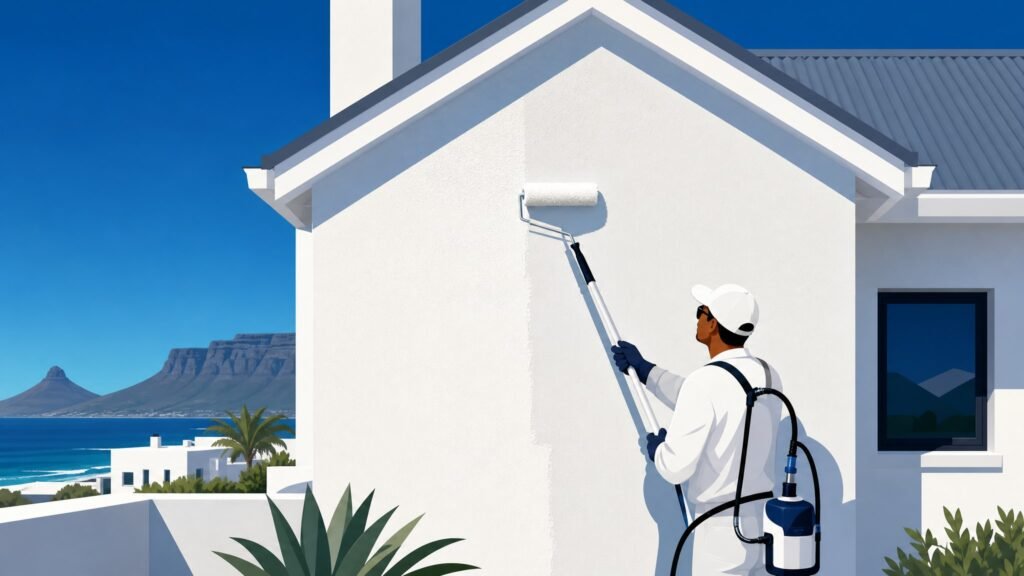
Selecting the right professional for your property takes more than comparing bottom-line figures on an estimate. Learning how to choose a painting contractor in Cape Town means weighing technical competence against harsh coastal weather and strict regulatory compliance. A low price often means skipped preparation steps or inferior materials that fail within months, and that costs more in remedial work than a proper job would have upfront. This guide gives you a structured vetting framework so you can spot contractors who deliver lasting protection rather than a temporary cosmetic refresh.
Why Vetting Matters for Cape Town Properties
Cape Town’s south-easterly winds and salt-laden air accelerate coating degradation on Atlantic Seaboard properties. That’s why these homes need specialized elastomeric or marine-grade paints rather than standard exterior acrylics. General handymen often lack the product knowledge to navigate these microclimates, and the result is premature peeling and substrate damage that devalues your asset. Proper vetting confirms the person you hire understands that local conditions demand application standards well beyond generic manufacturer guidelines.
You protect your investment by confirming a contractor’s familiarity with regional weather patterns before they ever pick up a brush. Ignore that environmental context, and you’ve found the main reason repaints fail long before their expected lifespan.
Essential Painting Contractor Checklist for Compliance
Your painting contractor checklist should prioritize legal and safety compliance before you even get to color schemes or timelines. Residential and commercial projects both carry real liability risk. Hire an uninsured operator, and you’re financially exposed if an accident or damage happens on your site. This documentation is the first filter for eliminating unqualified candidates, and it saves you time and legal exposure later.
Verifying Insurance and Liability Coverage
A reputable contractor should provide proof of public liability insurance covering at least R10 million for commercial sites, plus adequate coverage for residential homes. Ask for a current certificate of currency directly from their broker rather than accepting a photocopy that could be outdated or altered. You should also check that all workers are covered under the Compensation for Occupational Injuries and Diseases Act (COIDA), which protects you from being sued if a worker gets injured on your property.
Checking Industry Accreditation and Safety Standards
Industry accreditation shows a commitment to standards beyond basic business registration. Look for membership in bodies like the Master Painters Association or similar organizations that enforce codes of conduct and continuing education. For commercial or industrial sites, check that the contractor holds valid safety files compliant with the Occupational Health and Safety Act, including risk assessments and method statements specific to working at heights or handling hazardous materials.
Analyzing Your Painting Quote: Red Flags and Green Lights
A comprehensive painting quote should spell out crack repair, damp treatment, and primer application. Leave those line items out, and the contractor is likely planning to cut corners or charge extra later. Vague descriptions like “paint exterior walls,” with no mention of surface preparation methods or material brands, are major red flags that signal future variation orders. Detailed specifications show professional planning and let you compare bids like-for-like instead of guessing what’s included.
Scope of Work and Surface Preparation Details
Industry best practice puts surface preparation at roughly 60-70% of total labor time on exterior repaints, to ensure adhesion and prevent peeling. Your quote should itemize the actual steps: high-pressure washing, scraping loose paint, treating rust on metalwork, filling cracks with flexible fillers. If the scope skips this detail, the contractor likely plans to rush preparation to protect margin at the expense of longevity.
Wilcote Cape Town builds waterproofing assessments into its painting evaluations, because moisture ingress is the leading cause of paint failure on local residential and commercial facades. When reviewing quotes, look for explicit mention of render repair before painting; it shows the contractor understands that paint can’t adhere properly to a compromised substrate. A detailed roof painting quote breakdown is a concrete example of the specificity you should expect across every surface.
Material Specifications and Warranty Terms
Professional quotes name exact products, sheen levels, and spread rates rather than generic terms like “quality exterior paint.” Check that the specified primers are compatible with both the substrate and the topcoat system; mismatched products cause adhesion failures no matter how good the paint is. The quote should also state warranty terms clearly, distinguishing the manufacturer’s product guarantee from the contractor’s own workmanship warranty.
Questions to Ask Your Painter Before Signing
Asking targeted questions to a painter in Cape Town reveals operational maturity that references alone can’t confirm. Ask specifically about project supervision ratios, subcontractor policies, and how they handle surprises like hidden damp discovered mid-project. A contractor who answers vaguely or gets defensive about site management usually lacks the systems to deliver consistent quality on a complex job.
Evaluating Past Performance Through Reviews
Painting contractor reviews in Cape Town are useful, but you need to read them critically to separate genuine feedback from manipulated ratings. Look for reviews that mention a specific project challenge and how the contractor resolved it, rather than generic praise for friendliness or punctuality. Contact previous clients directly when you can, and ask specifically about post-completion support, and whether the finished work has held up through at least one full winter season.
You get more reliable intelligence by asking referees how the contractor communicated during problems than by asking if they were happy with the result. Technical competence matters less than integrity once unforeseen issues turn up mid-renovation, and they always do.
Assessing Technical Expertise for Specialized Surfaces
Painting is often the final layer of a broader protection system, and it needs technical coordination with other trades. Contractors who treat painting as purely cosmetic miss the points where moisture management, structural integrity, and coating performance intersect. That gap produces beautiful finishes that fail fast, because nobody addressed the underlying issue.
Waterproofing Integration and Moisture Management
Moisture-related failures cause most premature paint deterioration in coastal environments. Your contractor should be able to diagnose rising damp, penetrating moisture, and condensation before recommending any coating system. Appropriate waterproofing solutions for boundary walls often need installing before painting starts, and a qualified painter will flag that requirement at the assessment stage, not after the paint has already failed.
Commercial and Industrial Coating Requirements
Industrial and commercial facilities need coating systems built for chemical resistance, UV stability, and minimal maintenance. Standard residential painters typically don’t have access to the specialized products, or the training to apply them correctly. Comprehensive commercial building protection strategies combine painting with corrosion protection, fire retardancy, and hygiene requirements that residential contractors simply never encounter.
That specialization gap is why hiring a residential painter for industrial work almost always ends in costly rework within a couple of years.
Comparing Multiple Quotes Without Sacrificing Quality
Race-to-the-bottom pricing rewards corner-cutting, and corner-cutting shows up later as premature failure and higher lifetime costs. Normalize quotes by writing a standardized scope document and requiring every contractor to bid against identical specifications and material grades. That approach reveals real value differences instead of rewarding whoever submitted the vaguest estimate hoping to make margin on variations later.
Use our exterior painting cost guide to benchmark quotes against current market rates for properly specified work in your area. A quote well below the established range almost certainly omits essential preparation or uses substandard materials, whatever verbal assurances come with it. Comparing bids on total cost of ownership over ten years, rather than the sticker price, keeps the contractor’s incentives aligned with your long-term interests.
Securing Warranties and Post-Project Support
Knowing the difference between a product warranty and a workmanship guarantee saves you from unpleasant surprises when defects show up. Manufacturer warranties cover paint formulation defects only, and usually require proof that the paint was applied per the technical data sheet. Contractor workmanship guarantees cover application errors, inadequate preparation, and premature failure from poor technique, but only if it’s documented in writing with a clear remediation process.
Verbal warranty promises mean nothing legally and are impossible to enforce once a dispute starts. Insist on written terms that specify exactly what triggers coverage, how fast the contractor responds to a defect report, and whether remediation covers materials and labor or labor only. A contractor confident in their work hands over comprehensive written warranties without being asked twice. One planning to disappear after payment will resist putting anything in writing.
Request a detailed, itemized painting assessment and quote from Wilcote Cape Town to see professional vetting standards firsthand, and how thorough specification protects your property investment.